One of the biggest shocks in the 2025 FA Cup came when Plymouth Argyle, a struggling Championship side, eliminated Premier League leaders Liverpool with a 1-0 victory. While this result made headlines worldwide, it also provides valuable lessons for Singapore football.
By analysing the match data, we can uncover why Plymouth’s defensive resilience and tactical execution led to their upset win, and how these insights can be applied to our local football scene.
Key Areas of Analysis
For this breakdown, we will focus on three key areas that shaped the match outcome:
1. Shot Quality and Finishing Efficiency – How did Plymouth maximise their limited chances, while Liverpool struggled to score?
2. Pressing and Defensive Organisation – How did Plymouth’s compact defence neutralise Liverpool’s attacks?
3. Possession and Build-up Play – Did Liverpool’s high possession translate into meaningful attacking opportunities?
Shot Quality and Finishing Efficiency
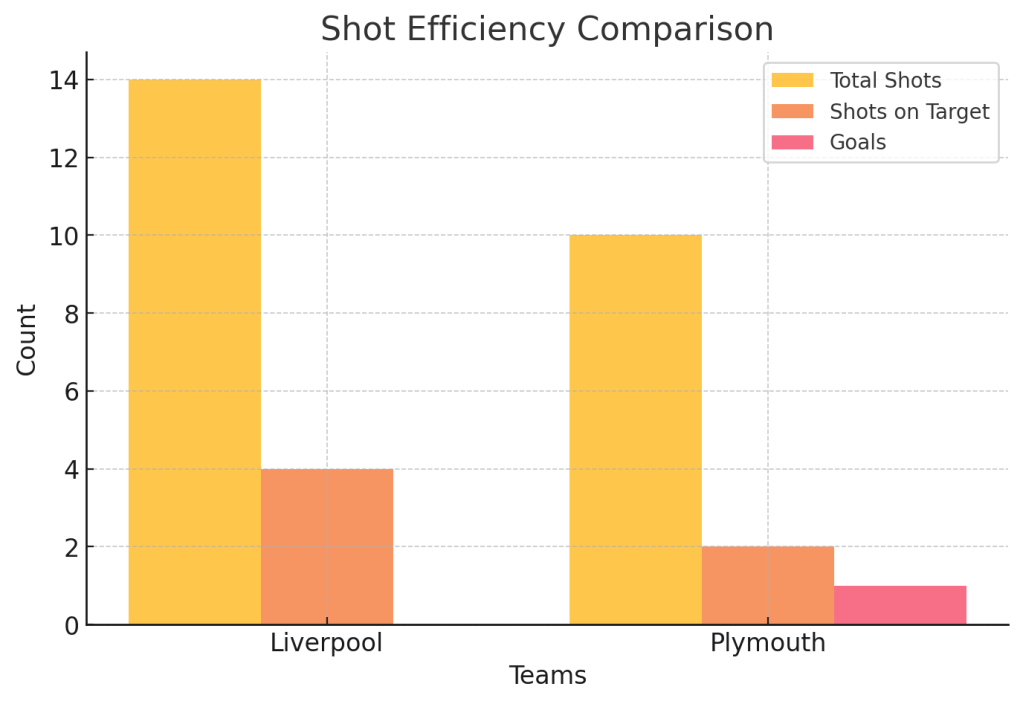
Despite Liverpool’s 14 shots, they managed only 4 on target, failing to break Plymouth’s defensive structure. Meanwhile, Plymouth had 10 shots with 2 on target, including the decisive penalty goal.
Lessons for Singapore Football
• Finishing matters more than volume – Plymouth’s efficiency in front of goal shows that teams do not need high shot volume to score. Singaporean teams must prioritise high-quality shot creation and finishing drills.
• Set-piece focus – The only goal came from a penalty, highlighting how crucial set-pieces are in tight games. Local teams should invest time in perfecting set-piece routines, including penalties and corners.
Visualisation: Shot Efficiency Comparison
Pressing and Defensive Organisation
• Liverpool dominated possession (75 percent) and completed 600 passes, but struggled to break down Plymouth’s compact defence.
• Plymouth had a high PPDA (Passes Per Defensive Action), meaning they pressed Liverpool less and focused on positional discipline.
• Their defensive block forced Liverpool to play wider, limiting central attacking threats.
Lessons for Singapore Football
• Compact defensive shape – Singaporean teams often struggle against superior opponents. Instead of chasing the ball aggressively, they should focus on staying compact and forcing the opponent into less dangerous areas.
• Defensive discipline – Plymouth did not press aggressively but instead maintained their shape. Local teams can learn from this by working on structured defensive training to reduce gaps in defence.
Visualisation: Defensive Organisation

Possession and Build-up Play
• Liverpool had an impressive 88 percent passing accuracy and completed more key passes (10 vs 5), yet lacked penetration.
• Plymouth, in contrast, played 50 long balls compared to Liverpool’s 30, showing a more direct style of play.
• Their direct approach helped them bypass Liverpool’s midfield and win the decisive penalty.
Lessons for Singapore Football
• Be adaptable in attack – Possession alone does not win matches. Singaporean teams must learn to vary their attacking strategies, combining short passing with direct play when necessary.
• Exploiting transitions – Plymouth used quick transitions and direct balls to bypass Liverpool’s high press. Local teams should practise transitioning from defence to attack swiftly to catch opponents off guard.
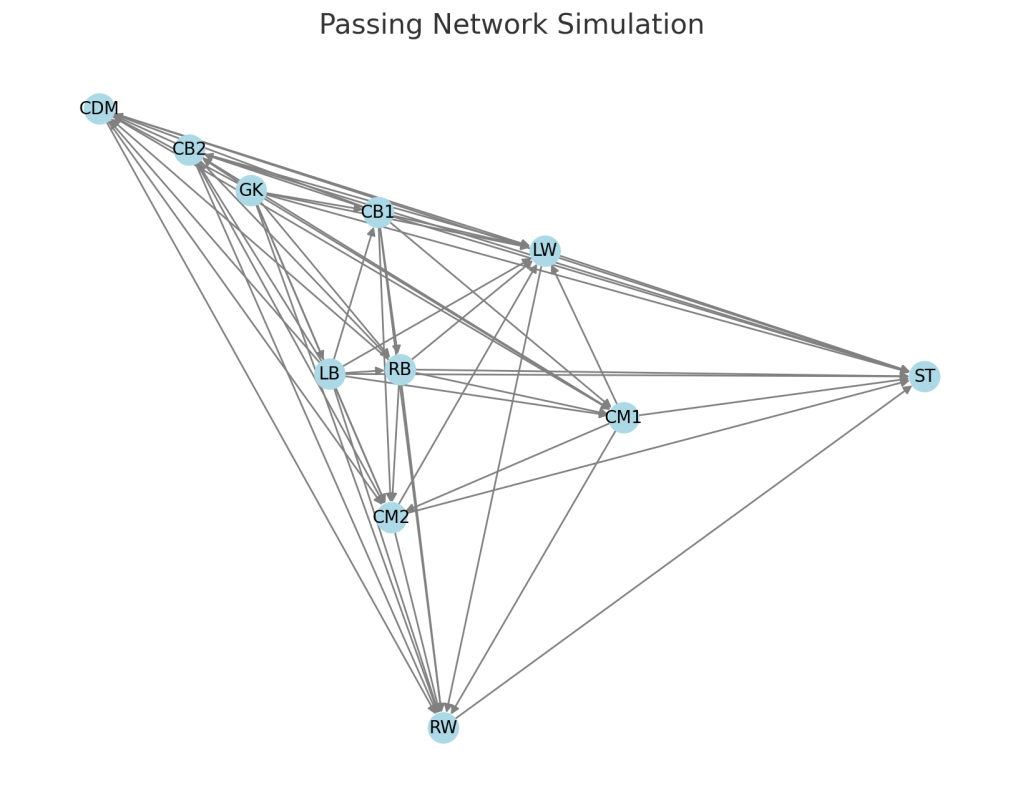
Visualisation: Passing Network
Final Takeaways for Singapore Football
• Defensive structure can level the playing field against stronger opponents.
• Tactical flexibility is crucial—possession-based play is not always the best solution.
• Set-pieces and efficient finishing can decide big matches.
How Singaporean Teams Can Implement These Learnings
• Develop structured defensive drills to maintain compactness.
• Train attacking players to break down deep defences with quick passing and movement.
• Prioritise set-piece efficiency in training.
• Improve transition play to capitalise on counter-attacks.
Final Thoughts
Plymouth’s victory over Liverpool was not luck—it was a result of tactical discipline, efficiency in attack, and strong defensive organisation.
Singaporean teams, whether in the Singapore Premier League or grassroots level, can learn from this match to improve their tactical awareness and execution.
What do you think? Can Singaporean teams adopt these strategies for success? Let us discuss.
#TheSGFootballScene #FootballAnalytics #SingaporeFootball #MatchAnalysis #TacticalInsights #DataAnalysis

 thesgfootballscene.com